Retinal organoid protocols rely on FBS during the months-long maintenance phase, adding lot-to-lot variability to an already long and sensitive differentiation.
At the Sunnybrook Research Institute Human Stem Cell and Organoid Facility, YEX suspension supplement replaced FBS in the maintenance phase of a published retinal organoid protocol (Harkin et al., PNAS 2024). Organoids matched the published protocol at day 30 and, at day 90, contained all major retinal cell types, including mature photoreceptors.
Data: SRI Human Stem Cell & Organoid Facility. 2026
Organoids maintained in YEX through day 90 of differentiation
Photoreceptors, bipolar, ganglion and amacrine cells, and Müller glia detected at day 90
Morphology and marker staining matched the published protocol
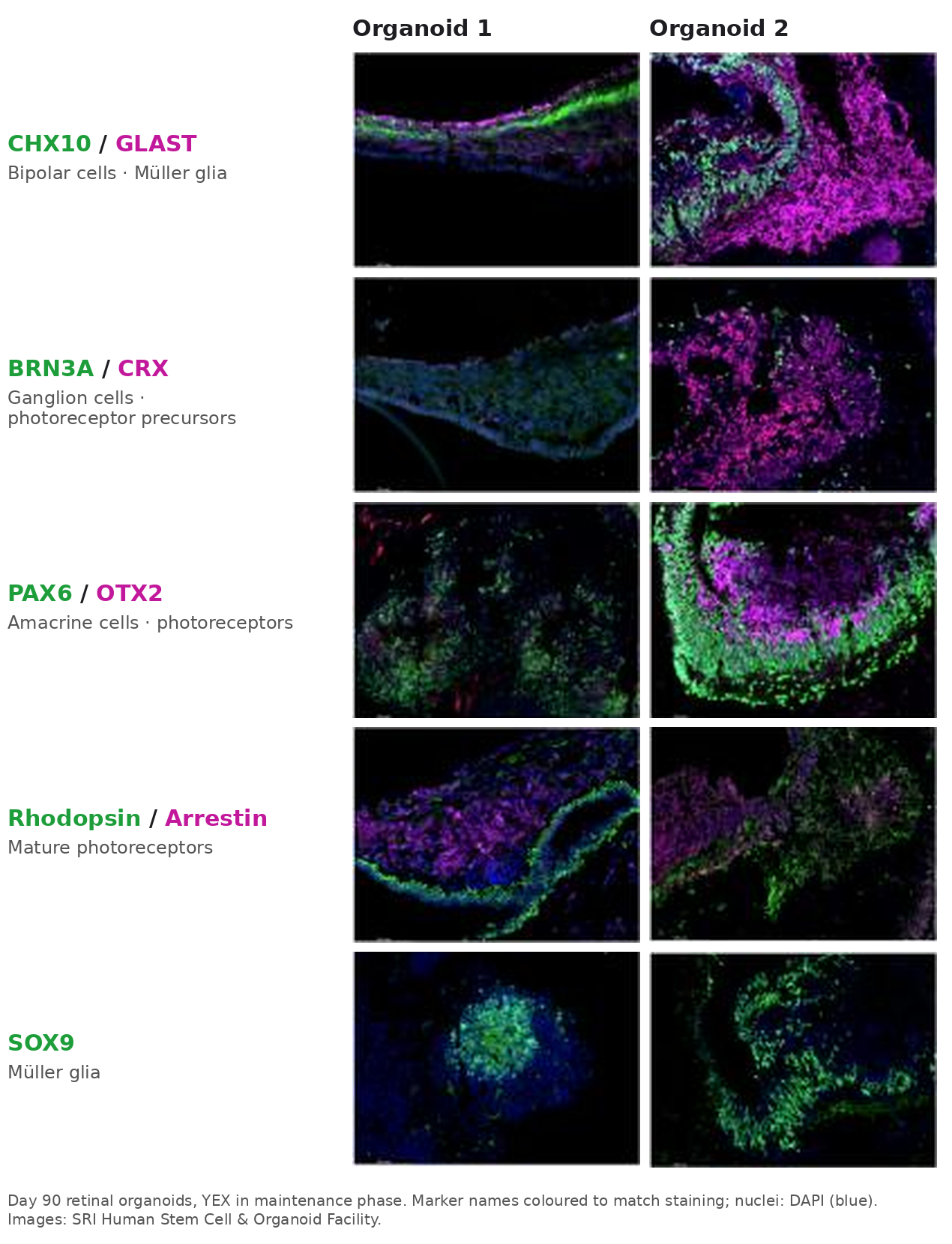
At day 90, organoids maintained in YEX contain photoreceptors, bipolar, ganglion and amacrine cells, and Müller glia.
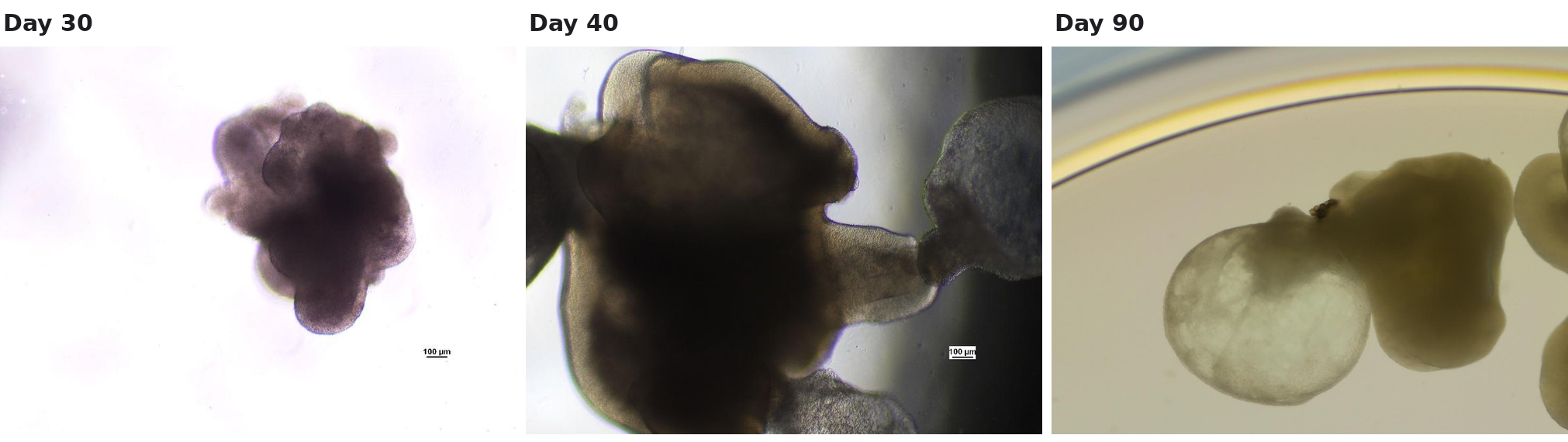
Retinal organoids develop through day 90 in YEX.
Add YEX suspension supplement from day 16 of differentiation: 1% on day 16, 3% on day 18 and 5% on day 20, then hold at 10% in ARDM from day 22 onward. Use YEX in the maintenance phase; replacing FBS from the attachment step onward reduced retinal tissue by day 90.